What Does Your Morning Orange Juice Have to Do with Gas Detection? Probably more…
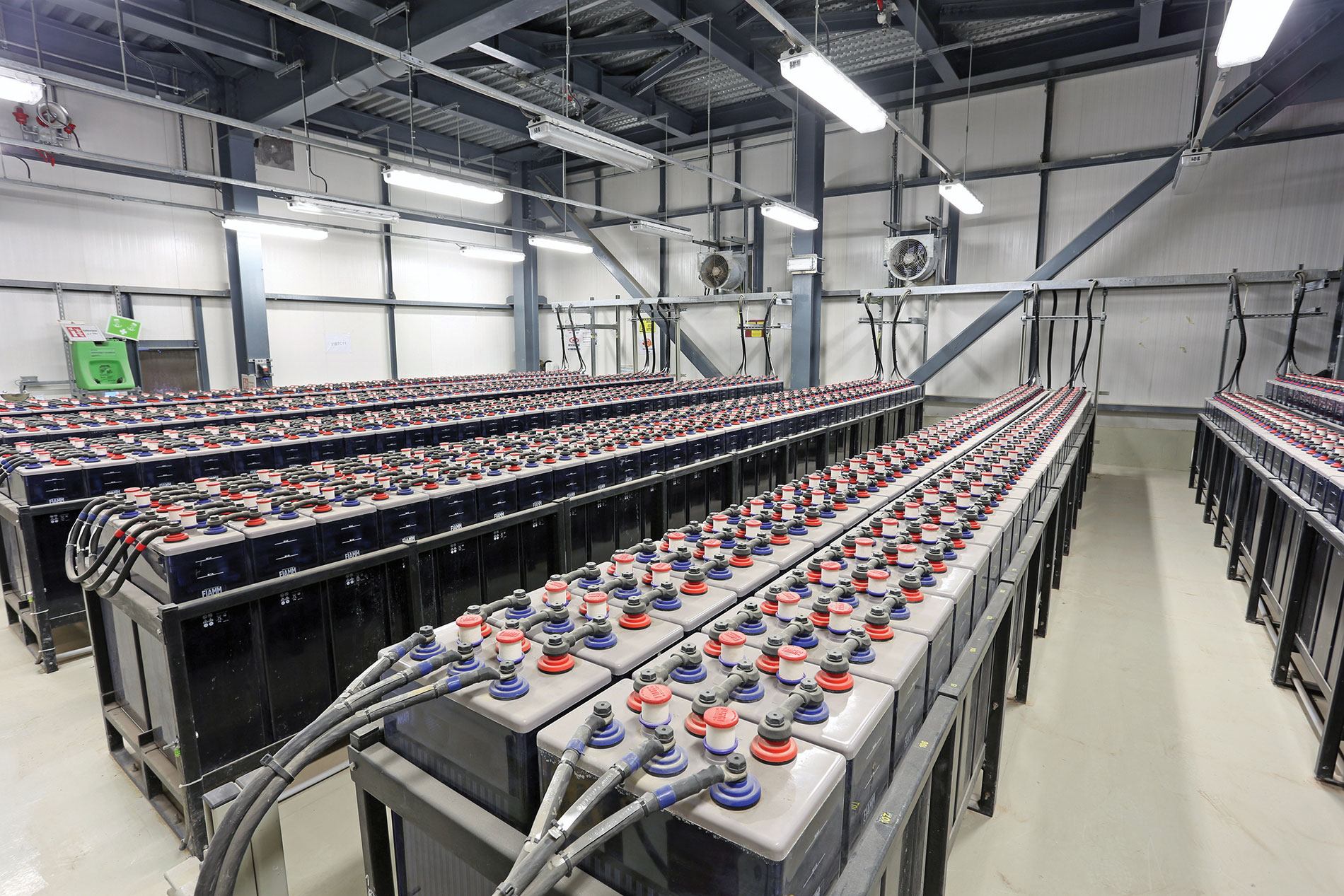
Hydrogen Detection for Battery Rooms – It Doesn’t Have to Be Complicated
Hydrogen Detection for Battery Rooms – It Doesn’t Have to Be Complicated
When people think about a hydrogen gas detection system for a battery room, they often imagine a large control panel, complicated wiring, multiple detectors, and an expensive installation.
But not every battery room needs a large or complicated gas detection system.
If you have one battery room, a UPS room, a forklift charging area, or only a few individual rooms, a standalone hydrogen detector may provide a much simpler and more practical solution.
Why Is Hydrogen Detection Important in Battery Rooms?
During the charging process, certain types of batteries can release hydrogen gas (H₂).
Hydrogen is:
- Colorless
- Odorless
- Highly flammable
- Much lighter than air
Because hydrogen rises, it can accumulate near the ceiling or in high points of a room.
If enough hydrogen accumulates, it can create a potentially dangerous flammable atmosphere.
A hydrogen detector provides continuous monitoring and can warn personnel before hydrogen reaches a dangerous concentration.
Do You Always Need a Complete Gas Detection System?
No.
For a large facility with many battery rooms or multiple gas detection points, a centralized gas detection system with a dedicated controller may be the right solution.
But what if you only have one battery room?
Or perhaps two or three separate rooms?
In many cases, installing a large gas detection control panel, running extensive wiring, and installing a complex system may simply not be necessary.
A standalone detector can provide a much simpler solution.
The basic requirement may be as simple as:
Detect Hydrogen → Warn Personnel → Activate Ventilation → Send an Alarm Signal
And all of this can potentially be accomplished with one standalone detector.
Example: TOC-750BAV-H2 Standalone Hydrogen Gas Detector
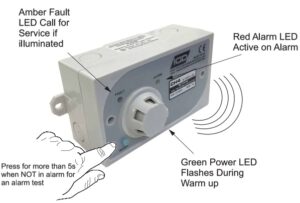
A good example of this approach is the TOC-750BAV-H2, manufactured in the United Kingdom.
The TOC-750BAV-H2 is a fixed standalone detector designed for continuous monitoring of Hydrogen (H₂).
Instead of requiring a separate gas detection controller, the detector incorporates the main functions required for a simple battery-room hydrogen monitoring application into one compact device.
In One Unit You Get:
- Continuous Hydrogen (H₂) monitoring
- Built-in audible alarm
- Built-in visual alarm
- Local Reset/Test functionality
- Relay output
- Connection capability to ventilation systems
- Connection capability to BMS or other external systems
- Standalone operation without a dedicated gas detection controller
In other words:
Detector + Alarm + Relay Control = One Simple Device
TOC-750BAV-H2 – Technical Information
| Specification | Details |
|---|---|
| Model | TOC-750BAV-H2 |
| Gas Detected | Hydrogen (H₂) |
| Detector Type | Fixed Standalone Gas Detector |
| Typical Measurement Range | 0–100% LEL |
| Typical Alarm Level | 10% LEL* |
| Alarm Indication | Built-in Audible & Visual Alarm |
| Reset/Test | Local Reset/Test Function |
| Output | Relay Output |
| Power Supply | 12–24 VDC |
| Ingress Protection | IP54 |
| Operating Temperature | 0°C to +55°C (32°F to 131°F) |
| Humidity | 0–95% RH, Non-Condensing |
| Approx. Weight | 200 g |
| Sensor | Replaceable Pre-Calibrated Sensor Front |
| Manufacturer | International Gas Detectors (IGD) |
| Manufactured In | United Kingdom |
*Alarm levels should always be selected according to the specific application, site requirements, applicable standards, ventilation design, and risk assessment.
How Can the TOC-750BAV-H2 Work in a Battery Room?
The detector continuously monitors the hydrogen concentration in the room.
Under normal conditions, it simply continues monitoring.
If hydrogen concentration reaches the configured alarm level, the detector can perform several functions.
1. Warn Personnel
The built-in audible alarm provides an immediate local warning.
There is no need to install a separate sounder for a basic local alarm application.
2. Provide a Visual Alarm
The integrated visual alarm provides an additional indication that hydrogen has reached the configured alarm level.
This is particularly useful in industrial areas where background noise can make audible alarms harder to hear.

3. Automatically Activate Ventilation
This is one of the most useful features for battery-room applications.
The detector includes a relay output that can be connected to the room ventilation or exhaust system.
When hydrogen reaches the configured alarm level, the relay can send a signal to start the ventilation system.
A typical sequence could be:
Battery Charging
↓
Hydrogen Released
↓
Hydrogen Rises Toward Ceiling
↓
TOC-750BAV-H2 Detects Hydrogen
↓
Audible + Visual Alarm
↓
Relay Activates
↓
Ventilation / Exhaust Fan Starts
This provides a very simple method of combining hydrogen detection and ventilation control.
Connection to BMS or Other Control Systems
Standalone does not mean isolated.
If the facility already has a Building Management System (BMS), PLC, ventilation controller, external alarm panel, or other monitoring system, the detector’s relay output can be used to provide an alarm signal to that system.
For example:
TOC-750BAV-H2 → Relay → BMS
or
TOC-750BAV-H2 → Relay → Ventilation Control
or both, depending on the system design.
This allows the detector to provide immediate local protection while also communicating the alarm condition to another system.
Where Should the Hydrogen Detector Be Installed?
Hydrogen is much lighter than air.
Unlike many gases that may remain near floor level, hydrogen rises rapidly and can collect at the highest points of an enclosed space.
For this reason, hydrogen detectors are normally installed at high level or near the ceiling.
However, simply installing a detector anywhere on the ceiling is not enough.
Correct detector placement should consider:
- Location of the batteries
- Potential hydrogen release points
- Ceiling height
- Ceiling geometry
- Beams or enclosed ceiling pockets
- Room ventilation
- Exhaust fan locations
- Supply-air locations
- Air movement
- Room dimensions
- Potential hydrogen accumulation areas
A proper site review can help determine the most appropriate detector location.
Where Can This Type of Detector Be Used?
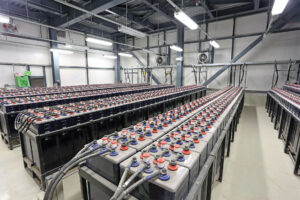
The TOC-750BAV-H2 can be a practical solution for applications such as:
- Battery Rooms
- UPS Battery Rooms
- Forklift Battery Charging Areas
- Industrial Battery Charging Stations
- Battery Testing Rooms
- Battery Research Laboratories
- Hydrogen Generator Areas
- Hydrogen Equipment Rooms
- Individual rooms where hydrogen may accumulate
One Room? Keep It Simple.
Imagine a facility with one small battery room.
The facility wants to:
✓ Continuously monitor hydrogen
✓ Alert employees if hydrogen concentration increases
✓ Automatically start an exhaust fan
✓ Send an alarm to the BMS
Do you necessarily need a large gas detection control panel?
Not always.
A standalone detector such as the TOC-750BAV-H2 may be able to perform all of these functions from a single device.
That can mean:
- Less equipment
- Less wiring
- Simpler installation
- Easier maintenance
- Lower installation cost
- Easier troubleshooting
- No unnecessary dedicated gas detection controller
When Is a Larger Gas Detection System Better?
Standalone detectors are excellent for many smaller applications, but they are not the answer for every facility.
If you have:
- Many battery rooms
- Multiple hydrogen detection points
- Different gases to monitor
- Centralized alarm requirements
- Multiple alarm levels and control functions
- Complex shutdown sequences
- Extensive remote monitoring requirements
then a centralized gas detection system may be the better approach.
The goal should not be to install the largest system possible.
The goal is to install the right system for the application.
Simple Hydrogen Protection for Battery Rooms
Hydrogen detection does not always have to involve a complicated gas detection system.
For individual battery rooms and smaller applications, a standalone detector can provide an effective combination of:
Continuous Detection + Local Alarm + Ventilation Control + External Alarm Signal
The TOC-750BAV-H2 Standalone Hydrogen Gas Detector is one example of how this can be achieved with a compact and practical solution.
Need Help With Your Battery Room?
Every battery room is different.
The correct solution depends on the battery type, room size, ceiling configuration, ventilation, potential hydrogen release, number of rooms, and required alarm actions.
MSGD can help evaluate the application, select the appropriate hydrogen detector, determine detector placement, and provide installation, testing, calibration, and ongoing service.
Whether you need one standalone hydrogen detector or a complete multi-point gas detection system, the objective is the same:
Keep the solution simple, appropriate, and effective.
Related Posts