What Is a Confined Space? According to occupational safety regulations, a confined space is any…
How to Tune a Biogas Generator for Maximum Energy Output
Optimizing Biogas Power Generation Through Accurate Gas Analysis
Across the world, wastewater treatment plants and landfill gas recovery facilities are transforming organic waste into renewable electricity. What was once considered waste has become a valuable source of energy, helping facilities reduce operating costs, improve energy independence, and lower greenhouse gas emissions.
The success of every biogas-to-energy system depends on one critical factor: understanding exactly what is happening inside the gas stream and inside the engine.
A typical landfill biogas stream consists primarily of:
- Methane (CH₄) – approximately 60%, the primary energy source.
- Carbon Dioxide (CO₂) – approximately 30%, which reduces the heating value of the gas.
- Hydrogen Sulfide (H₂S) – from a few ppm up to several thousand ppm, requiring continuous monitoring because of its corrosive nature.
- Smaller concentrations of oxygen (O₂), and in some cases hydrogen (H₂) and carbon monoxide (CO).
The presence of elevated carbon monoxide in untreated landfill gas may indicate unwanted combustion within the anaerobic process—a condition that should be investigated immediately.
Once collected and treated, the biogas is supplied to an industrial generator where chemical energy is converted into electrical power. Achieving maximum efficiency from this process requires more than simply supplying fuel. The generator must be carefully adjusted using accurate exhaust gas measurements.
Which Exhaust Gases Should Be Measured?
Engine tuning is based on several key combustion parameters, including:
- Oxygen (O₂)
- Carbon Monoxide (CO)
- Carbon Dioxide (CO₂)
- Nitric Oxide (NO)
- Nitrogen Dioxide (NO₂)
- Total NOx
- Exhaust Gas Temperature
Monitoring these parameters simultaneously allows operators to immediately see how every engine adjustment affects combustion efficiency, emissions, and electrical output.
Real-Time Engine Optimization
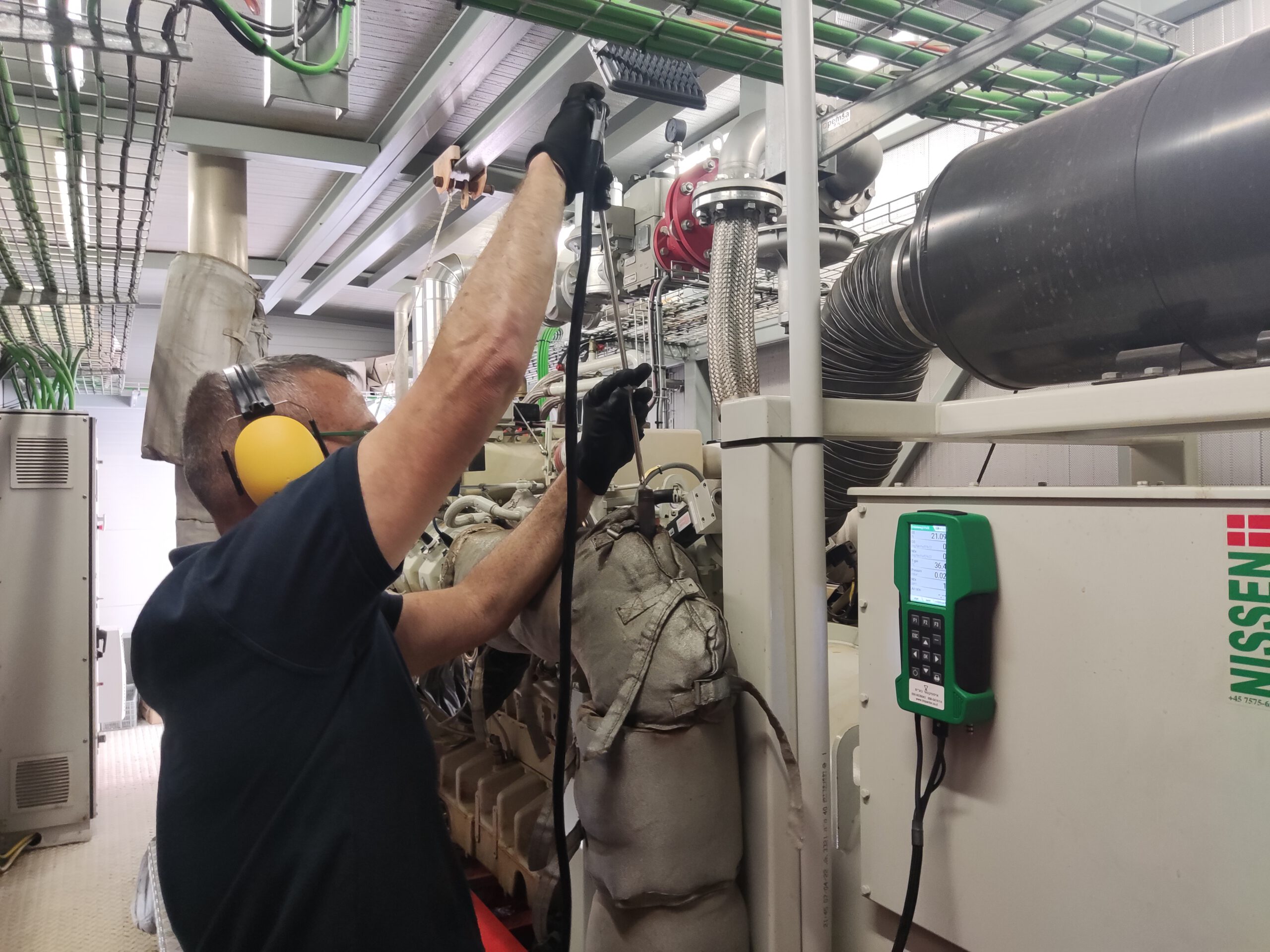
Using a high-temperature sampling probe, exhaust gases are continuously extracted directly from the generator exhaust.
The analyzer transmits all measured values wirelessly via Bluetooth, allowing the operator to monitor live measurements from a safe location inside the control room.
Any change to the generator—whether adjusting load, fuel flow, or combustion settings—is reflected within seconds in the exhaust gas composition. Instead of relying on assumptions, operators can make decisions based on real-time data.
Why TRUE NOx Matters
Industrial engines rarely produce stable emissions. Nitric Oxide (NO) and Nitrogen Dioxide (NO₂) constantly fluctuate as engine conditions change.
For this reason, professional analyzers measure both gases individually before calculating TRUE NOx, providing a far more accurate representation of actual emissions than a simple estimated value.
Environmental agencies typically require NOx to be reported in mg/m³, normalized to a reference oxygen concentration depending on the application:
- 5% O₂ – Gas-fired engines
- 15% O₂ – Diesel engines and gas turbines
- 3% O₂ – Industrial boilers
Accurate normalization ensures compliance while allowing meaningful comparison between different operating conditions.
Beyond Exhaust Gas Analysis
The same analyzer can also be used to measure the composition of landfill gas itself, including methane, carbon dioxide, hydrogen sulfide, oxygen, hydrogen, and carbon monoxide.
With the addition of dedicated probes, the instrument can also measure gas flow, differential pressure, gas velocity, temperature, and perform gas leak detection around engines, pipelines, flanges, and boiler rooms.
Reporting Made Simple
After measurements have stabilized, complete inspection reports can be generated with a single touch.
Reports may include:
- Gas concentration results
- Graphical trends
- Site information
- Operator details
- Photos taken during the inspection
- Company logo
- Export to PDF or Excel
- Instant sharing by email or WhatsApp
Accurate measurements do far more than satisfy regulatory requirements. They help operators maximize electrical output, reduce fuel consumption, extend engine life, minimize emissions, and ensure that every cubic meter of biogas is converted into the greatest possible amount of usable energy.
Related Posts