What Does Your Morning Orange Juice Have to Do with Gas Detection? Probably more…
Can You Spot the Problem?
Can You Spot the Problem?
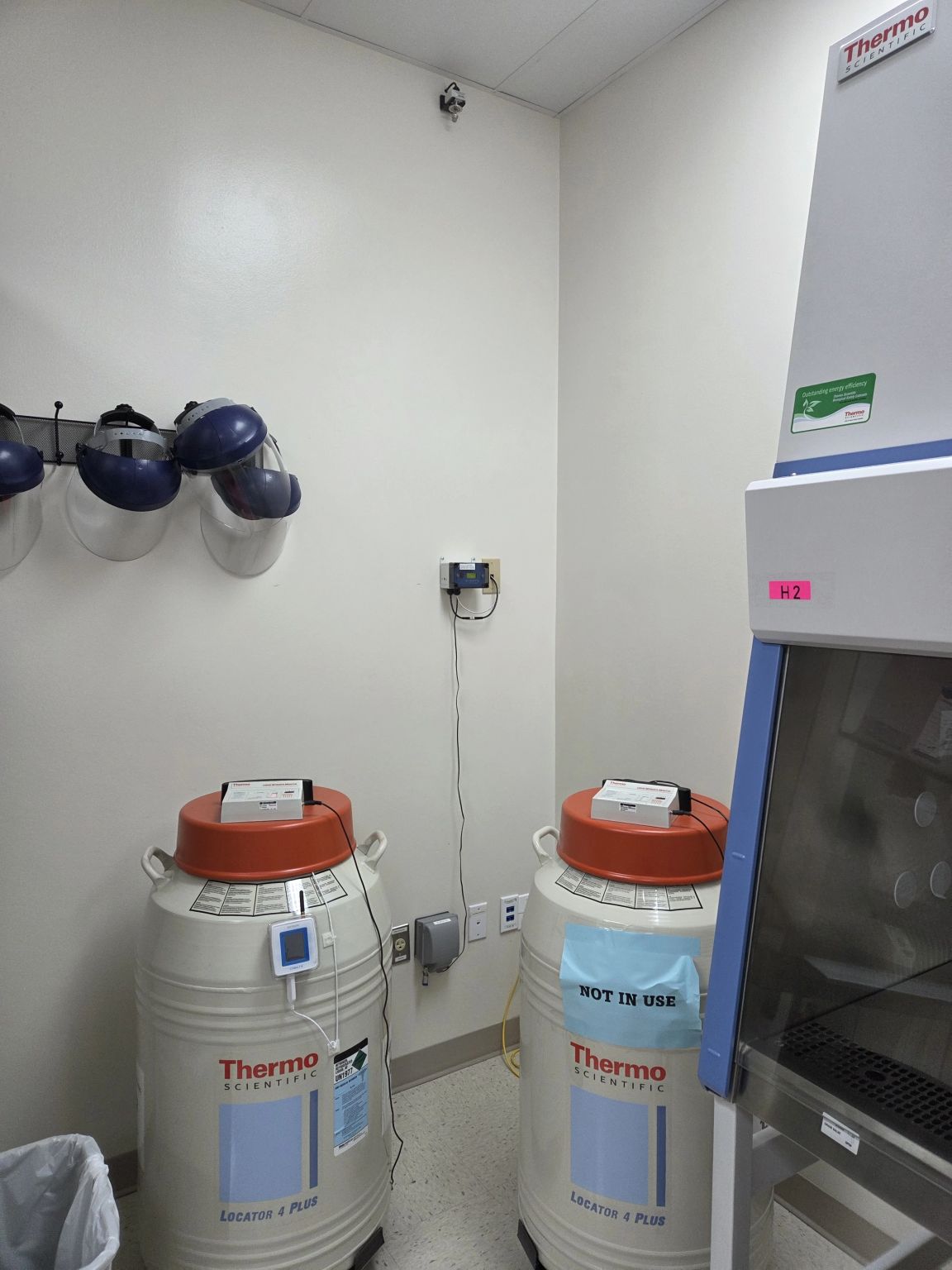
Take a close look at this laboratory.
At first glance, everything appears to be exactly as it should be.
There are liquid nitrogen (LN₂) storage dewars.
A professional oxygen deficiency monitoring system has been installed.
A remote oxygen sensor is connected and operating.
The installation looks clean.
The equipment looks modern.
Everything seems to be in place.
So…
Would you feel safe working in this room?
Most people would answer “Yes.”
And that’s exactly why this example is so important.
Because there is one critical mistake hiding in plain sight.
Can you spot it?
The Answer
The oxygen sensor is installed…
…on the ceiling.
It may seem like a perfectly reasonable location.
After all, many sensors are mounted high on walls or ceilings.
Unfortunately, for this application, it is one of the worst places the sensor could be installed.
Why Does This Matter?
Let’s imagine that one of the liquid nitrogen dewars begins to leak.
Nothing explodes.
Nothing catches fire.
There is no smoke.
There is no loud noise.
In fact…
You probably wouldn’t notice anything at all.
Yet, at that very moment, the room could already be becoming dangerous.
What Happens During a Liquid Nitrogen Leak?
Liquid nitrogen is incredibly cold.
When it escapes from a storage vessel, it rapidly evaporates and expands into nitrogen gas.
As this extremely cold gas enters the room, it behaves differently from the surrounding air.
Instead of immediately mixing throughout the room, it initially spreads across the lowest areas like an invisible blanket.
Where do people stand?
On the floor.
Where do people breathe?
About 1.5 to 1.8 meters above the floor.
And where is the oxygen disappearing first?
Exactly where people are.
The nitrogen gradually pushes oxygen away from the breathing zone.
The danger is completely invisible.
There is no color.
There is no warning smell.
There is no way for a person to recognize that oxygen is disappearing.
Now Think About the Detector
If the oxygen sensor is mounted near the ceiling…
what exactly is it measuring?
Not the air around the workers.
Not the air near the leak.
Not the air where oxygen levels are dropping first.
Instead, it is measuring air that may still contain normal oxygen levels.
Only after the nitrogen has warmed, mixed with the room air, and finally reached the ceiling will the detector begin to respond.
By then…
precious time may already have been lost.
Those extra seconds—or even minutes—can be the difference between a simple warning and a life-threatening emergency.
The Detector Isn’t the Problem
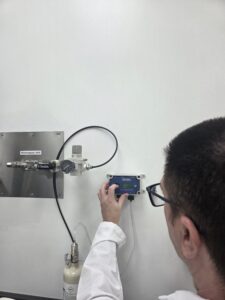
This is what surprises many people.
The detector itself may be excellent.
It may be fully calibrated.
It may meet every international standard.
It may even be brand new.
Yet the entire safety system can still fail to provide early warning…
simply because the detector was installed in the wrong location.
One of the Most Common Mistakes We See
During gas detection surveys, we often find facilities that have invested thousands—or even tens of thousands—of dollars in sophisticated gas detection equipment.
The controllers are excellent.
The sensors are high quality.
The installation looks professional.
But one simple design mistake dramatically reduces the effectiveness of the entire system.
The sensor is not installed where the gas hazard actually develops.
Every Gas Behaves Differently
One of the biggest misconceptions in gas detection is that every sensor can be installed at the same height.
That simply isn’t true.
Every gas behaves differently after a leak.
Some gases rise.
Some gases sink.
Some mix rapidly with the surrounding air.
Others remain concentrated near the leak source for a significant period of time.
That’s why detector placement should never be based on guesswork or convenience.
It should always be based on:
- The physical properties of the gas
- The location of potential leak sources
- Airflow and ventilation patterns
- Room geometry
- Occupancy and personnel exposure
- Applicable safety standards
Sensor Placement Saves Lives
Choosing the correct gas detector is only half of the solution.
Choosing the correct location for that detector is what provides meaningful protection.
A detector installed in the wrong place can create a dangerous false sense of security.
A detector installed in the right place can provide the early warning that gives people enough time to react safely.
Sometimes, moving a detector just a few feet can significantly improve the effectiveness of the entire gas detection system.
The Takeaway
The next time you walk into a laboratory, mechanical room, production facility, or gas storage area, don’t just ask:
“Is there a gas detector installed?”
Ask a more important question:
“Is it installed in the right location?”
Because in gas detection, the difference between a good installation and a great installation isn’t the detector itself.
It’s where you put it.
Related Posts